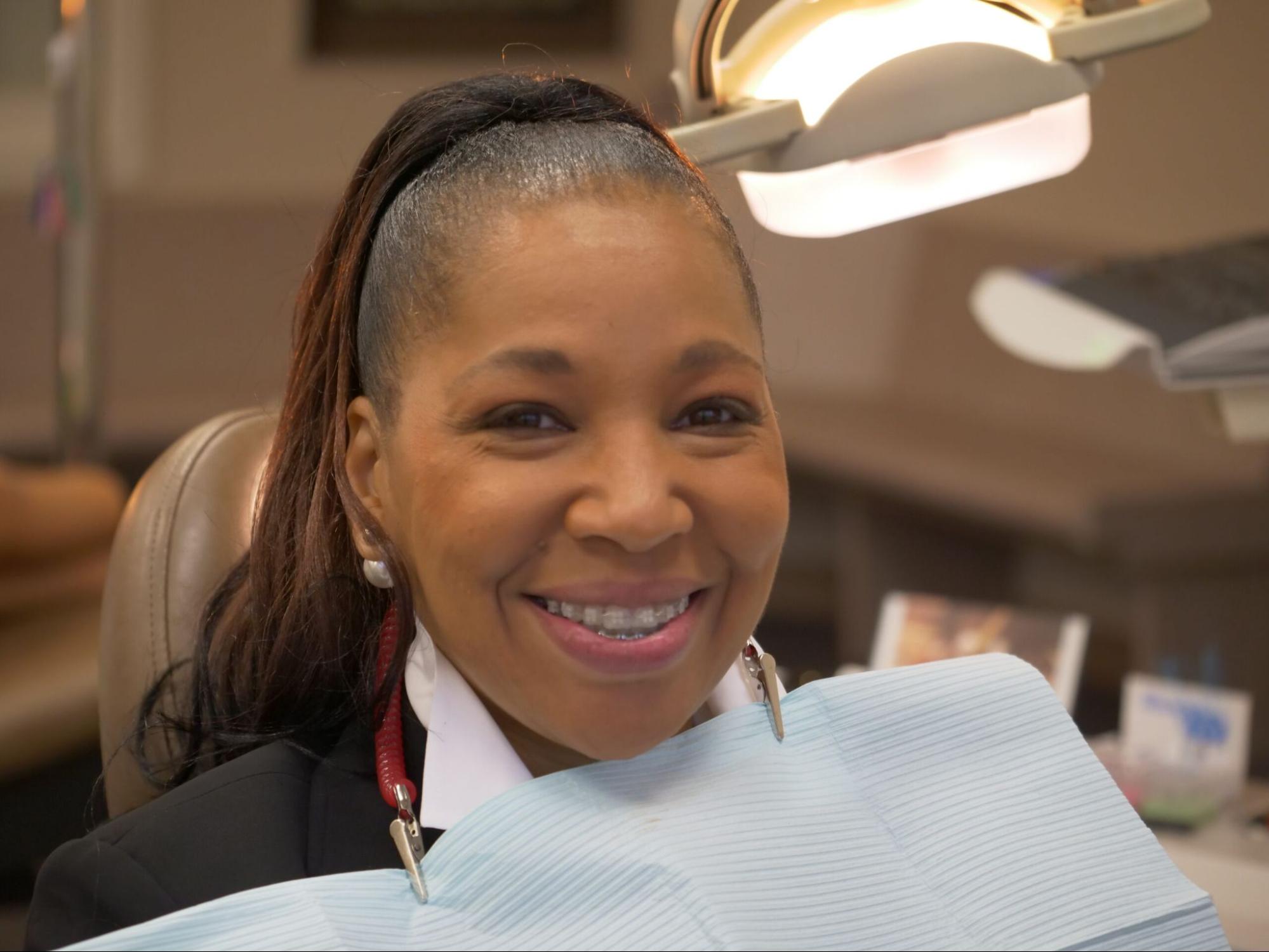
Braces can help with TMJ issues when a misaligned bite is part of what’s straining your jaw joint. Once the upper and lower arches meet evenly, chewing forces spread across more surfaces, which often eases muscle overwork. Not every case is bite-related, though, so a hands-on orthodontic exam is the only reliable way to know.
So, can braces help with TMJ issues in your situation? Maybe. Jaw trouble rarely has a single cause, and honest answers start with a real evaluation instead of a guess.
What Is TMJ Disorder and How Is It Related to Your Bite?
One distinction is worth clearing up first. The TMJ is the temporomandibular joint, the small hinge on each side of your head that connects your lower jaw to your skull. TMD, or temporomandibular disorder, is the condition that affects that joint and the muscles around it. Most people say “TMJ” when they mean TMD.
Each joint is more complicated than a simple hinge. A small cartilage disc sits between the jawbone and the socket, cushioning the load while the jaw slides forward and rotates open. Ligaments hold that disc in place, and several thick muscle groups power every bite, so trouble can start in the disc, in the muscles, in the ligaments, or in the way your teeth guide the jaw closed.
Symptoms show up in a lot of different ways:
- Soreness or tenderness in the jaw, temples, or cheeks
- Clicking, popping, or grating sounds when you open and close
- Headaches, especially in the morning
- Ear aching or a feeling of fullness with no infection
- Limited opening, or a jaw that catches and locks
- Tired, achy jaw muscles after chewing or talking
Causes are just as varied. Bruxism (clenching and grinding), stress, arthritis, a blow to the jaw, disc displacement inside the joint, and malocclusion can all play a part. Often several of them stack together.
That’s exactly why bite alignment gets attention. When your teeth don’t meet evenly, your jaw muscles compensate, and compensation over years adds up. An orthodontic evaluation sorts out whether alignment is one of your contributing factors or simply a bystander.
How Braces Can Help With TMJ Issues and Improve Jaw Function
Braces improve jaw function by moving teeth into positions where the upper and lower arches contact evenly. Balanced contact distributes bite forces across many teeth instead of a few, which reduces strain on the chewing muscles and the joint itself. Skeletal cases may also need expanders, elastics, or coordinated surgery.
Here’s how that plays out:
- Even contact reduces overload. When only a handful of teeth take the brunt of every bite, the surrounding muscles work overtime to protect them.
- Correcting the bite relationship helps. Overbites, underbites, crossbites, and open bites all push the lower jaw into a compensating position. Fixing the relationship lets the jaw rest where it belongs.
- Fewer clenching triggers. A single high spot can act like a pebble in your shoe. Remove it, and the clenching reflex often calms down.
- Extra tools for harder cases. Elastics, temporary anchorage devices (TADs), palatal expanders, and, for true skeletal discrepancies, surgical orthodontics coordinated with an oral surgeon.
Timelines matter here, too. Symptom changes tend to follow bite changes gradually over months, not days, and some people notice ups and downs along the way as the bite shifts through intermediate positions.
Muscles need time to unlearn old habits as well. Chewing muscles that have braced against an interference for years often stay guarded for a while after that interference is gone, which is one reason progress can feel slow early on. Retainers matter for the same reason: holding the corrected bite steady gives those muscles a consistent position to settle into.
Care often works best as a team effort. Dr. Jim Thacker and Dr. MaryEvan Thacker Hellebusch regularly coordinate with general dentists, TMJ specialists, and physical therapists so the muscle side and the alignment side get addressed together.
Potential Benefits of Orthodontic Treatment for TMJ Symptoms
When misalignment is genuinely part of the picture, correcting it can pay off in several ways:
- Balanced bite forces. Chewing pressure spreads across the arch rather than hammering a few teeth.
- Less muscle overuse. Jaw fatigue and tension headaches sometimes ease as the muscles stop compensating.
- Quieter joints for some people. Clicking may lessen, though it doesn’t disappear in every case.
- Better chewing comfort. Food breaks down more efficiently when teeth meet the way they should.
- Less uneven wear. Flattened, chipped, or notched enamel from grinding tends to slow once forces even out.
- Long-term stability. Retainers hold the corrected bite so the improvement lasts.
- Secondary gains. A straighter smile and, in certain cases, better airway posture come along for the ride.
These benefits also tend to build on each other. Comfortable chewing encourages more balanced use of both sides, balanced use keeps enamel wear even, and even wear helps protect the corrected bite over the long run. Your general dentist can monitor enamel and gum health along the way.
One honest caveat: orthodontics is not a guaranteed cure for TMD. It addresses one contributing factor. Stress, arthritis, and old injuries need their own care.

Braces vs. Invisalign vs. Other TMJ Treatments
Different tools solve different parts of the puzzle. Here’s how the common options compare:
| Option | What it does for TMJ symptoms | Best suited for |
|---|---|---|
| Metal braces | Precise control over bite correction, including vertical and rotational movement | Complex malocclusion, significant bite discrepancies, growing teens |
| Clear braces | Same mechanics as metal braces with a lower-profile look | Adults and teens who want discreet treatment with full bite control |
| Invisalign | Moves teeth comfortably with removable trays; the aligner surface itself can feel like a thin bite plane for some people | Mild to moderate bite issues, adults who clench and prefer a removable option |
| Splints / night guards | Cushion the joint and reduce grinding forces; manage symptoms without changing alignment | Symptom relief, bruxism protection, short-term or ongoing support |
| Physical therapy | Addresses muscle tension, posture, and joint mobility | Muscle-dominant TMD, post-injury recovery |
| Surgical orthodontics | Repositions the jaws themselves when the discrepancy is skeletal | Severe skeletal cases confirmed by imaging and specialist evaluation |
A few things worth understanding before you choose:
Braces still hold the edge for complicated corrections. Fine vertical control and heavy rotations are simply easier with fixed brackets and wires.
Invisalign wins on comfort and removability, and many adults with jaw tension appreciate being able to take trays out for a meal. Thacker Orthodontics is an Invisalign Provider, so both options stay on the table.
Splints and guards deserve credit, too. They don’t straighten anything, but they protect enamel and calm muscles while you and your orthodontist figure out the bigger picture.
Most professional guidance, including from the American Association of Orthodontists, favors conservative, reversible care before permanent bite changes. Start gentle, see how you respond, then decide.
Combining tools is common rather than unusual. Many people wear a night guard while braces or Invisalign handle the alignment work, then keep a guard afterward if grinding continues, and some add physical therapy exercises for the muscles that stayed tight the longest. The right mix depends on which factors your exam actually turns up.
Who Is a Good Candidate for Braces to Address TMJ?
Good candidates for braces to address TMJ usually have a bite-related cause behind their symptoms, meaning the way the teeth meet is adding to the strain. Others are better served by a different starting point.
More likely to benefit:
- Visible malocclusion such as a deep overbite, crossbite, underbite, or open bite
- Uneven or accelerated tooth wear
- Symptoms that flare with chewing or bite contact
- Teeth that shift or feel like they don’t have a “home” position
- Teens with developing bite issues, where growth timing works in your favor
Less likely to benefit from orthodontics alone:
- Jaw trouble that began after a specific injury or accident
- Joint arthritis or degenerative changes
- Stress-driven clenching in a bite that’s already stable and even
We screen thoroughly for a reason. A full evaluation at Thacker Orthodontics includes your symptom history, a bite and contact analysis, imaging, and a hands-on exam of the joints and chewing muscles. If the findings point away from alignment, a referral to a TMJ specialist or oral surgeon is the right call, and we’ll make it.
Timing deserves a mention as well. Teens who are still growing can benefit from appliances that guide jaw development while the bones are cooperative, while adults reach the same bite correction through tooth movement and, in select cases, surgical support.
Curious where you land? An exam or virtual visit is a low-pressure way to find out.
Frequently Asked Questions About Braces and TMJ
Can straightening teeth really help TMJ discomfort?
It can, when an uneven bite is contributing to the strain. Distributing chewing forces across the whole arch reduces overload on the muscles and joint. If your symptoms stem from arthritis, a past injury, or stress alone, orthodontics may not resolve them, which is why a proper evaluation comes first.
Is Invisalign better than braces for jaw discomfort?
Neither is automatically better. Invisalign trays are removable and cover the biting surfaces, which some people find calming if they clench, while braces offer more precise control for complex bite corrections. The right choice depends on what your bite actually needs, not on which appliance sounds more comfortable.
Can braces make TMJ worse or cause temporary jaw soreness?
Mild soreness after adjustments is normal and short-lived. As teeth move, your bite passes through in-between positions, so symptoms can fluctuate before settling. Tell your orthodontist about any change, since adjustments to elastics, wire sequencing, or timing can usually smooth things out.
How long before TMJ symptoms improve with braces?
Symptom changes generally follow bite changes over months rather than days. Some people notice muscle relief fairly early once major interferences are corrected, while others see the biggest difference near the end of treatment when the bite fully settles. We track your progress at every visit.
What if my TMJ doesn’t improve with orthodontics?
Then we look elsewhere, and that’s a legitimate outcome. TMD is often multi-factor, so muscle therapy, a night guard, stress management, or care from a TMJ specialist may be the missing piece. Referrals are part of how we handle complex cases.
Does insurance cover braces for TMJ issues?
Coverage varies quite a bit. Orthodontic benefits usually apply to the tooth movement itself, while jaw-related treatment sometimes falls under medical rather than dental plans. Our team files claims for you and explains what your specific policy covers before treatment starts.